Overview
The Department of Aquaculture was established in 1995 under the visionary guidance of the late Dr. K. H. Alikunhi (1918–2010), renowned fishery scientist, former Director of the Central Institute of Fisheries Education (CIFE), Mumbai, and consultant to the Food and Agriculture Organization (FAO). A native of Eriyad, Kodungallur, Dr. Alikunhi played a pivotal role in instituting the department and initiating the B.Sc. Programme in Aquaculture.
The founding faculty was Dr. C. A. Ignatius (Retd.), who also served as the first Head of the Department. In 1999, Dr. S. Sureshkumar (currently Professor of Aquaculture, Kerala University of Fisheries and Ocean Studies) briefly joined before transferring to MES Ponnani College. That same year, Sri. Shibu A. Nair and Dr. Kesavan K. were appointed as permanent faculty members. Following the retirement of Dr. C. A. Ignatius in 2018, Dr. Kesavan K. assumed charge as Head of the Department.
Subsequent appointments included Dr. Dhanya P. R. (2018), Smt. Sreelakshmi T. P. (Guest Faculty, 2022), Dr. Remisha O. (Guest Faculty, 2024) and Dr. Sayana K. A. (Permanent Faculty, 2025). With the retirement of Dr. Kesavan K. in March 2026, Dr. Sayana K. A. took charge as Head of the Department. The department currently has four faculty members.
The department offers a diverse portfolio of academic programmes designed to meet regional and global needs in aquaculture and fisheries:
- B.Sc. Aquaculture (Honours) – An aided programme affiliated with the University of Calicut.
- Permanent affiliation granted in 1998.
- Restructured in 2009 under the Choice Based Credit and Semester System (CUCBCSS).
- Revised in 2014 with the updated CUCBCSS framework.
- Another curriculum revision in 2019, incorporating Outcome-Based Education (CBCSS).
- Currently a Four Year Under Graduate Programme (FYUGP) with multiple exit options.
- Other Courses
· Multi-disciplinary course in Marine Science.
· Minor course in Aquaculture.
· Certificate Course - Aquasphere: Foundations in Aquarium Management
The programme is uniquely tailored to the socio-economic context of the coastal belt where the college is located. With a significant proportion of students hailing from fishing communities, the curriculum emphasizes career readiness and self-employment opportunities, aligning with the vision of the Muslim Educational Society.
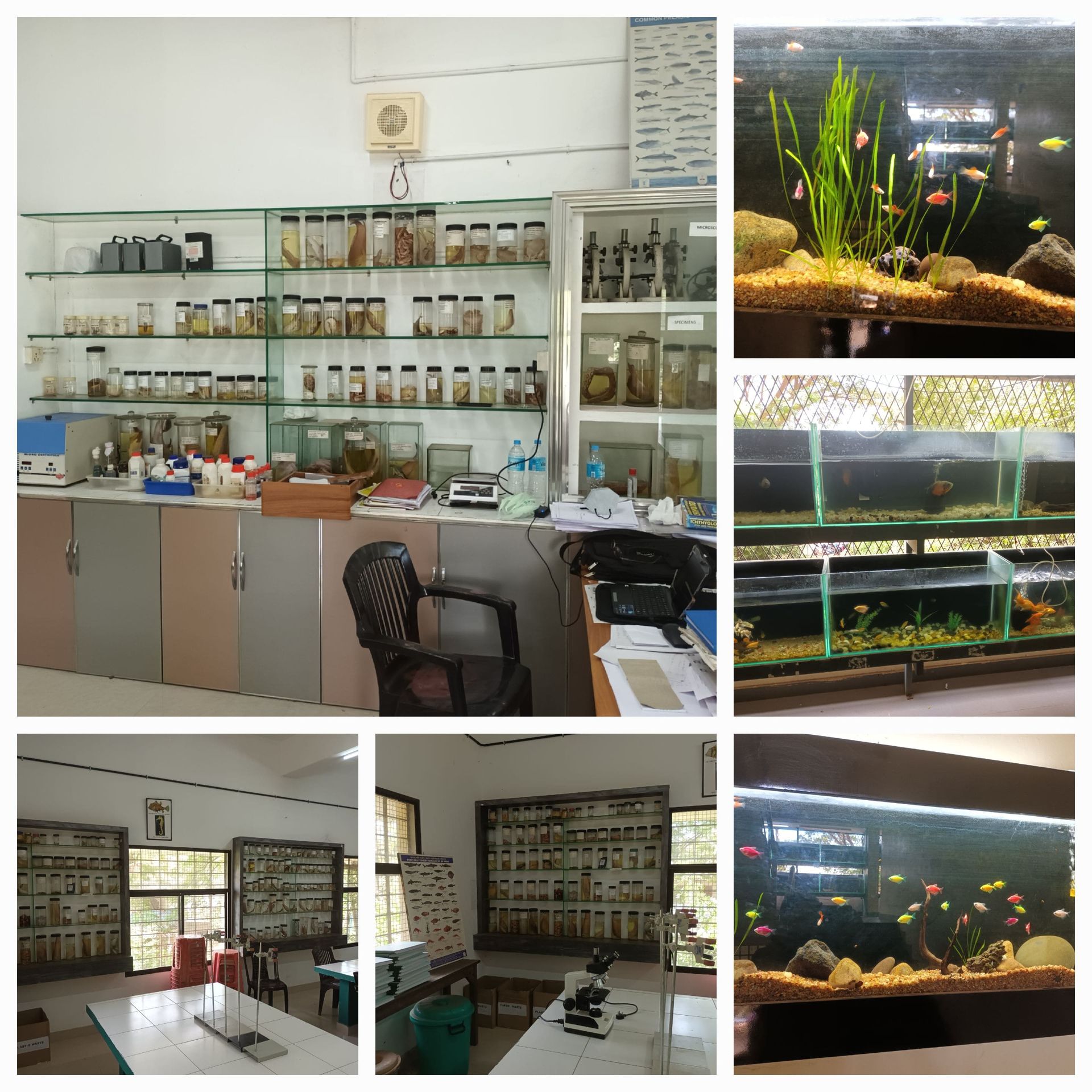
The department is equipped with modern infrastructure to support both teaching and research:
- Laboratories – Two well-established laboratories with advanced instrumentation.
- Classrooms – ICT-enabled learning spaces.
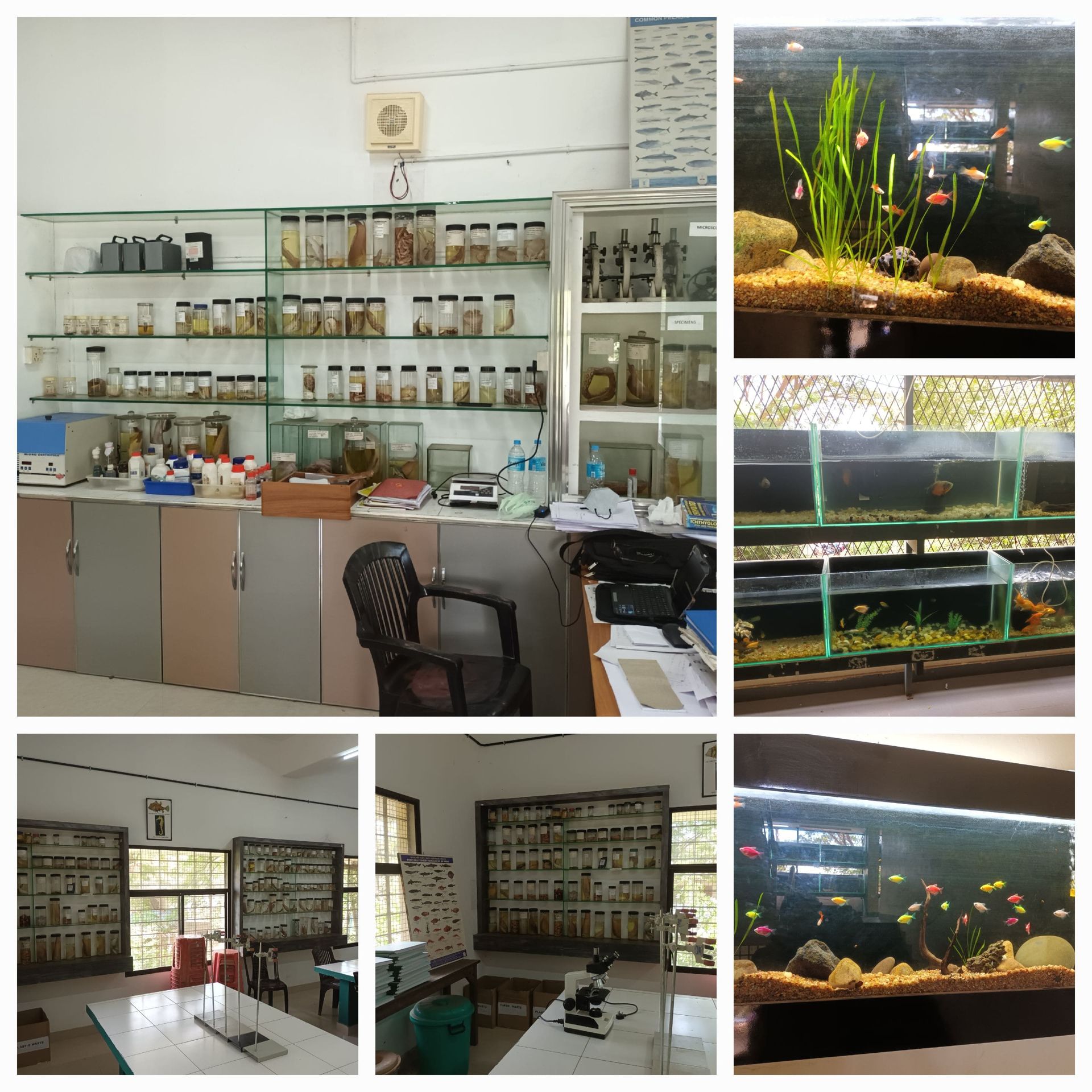
- Aquaculture Facilities – Fish culture tanks, indoor aquaria, and a distinctive eight-foot plasma aquarium.
- Major Equipment – Laminar Flow Chamber, Autoclaves, high-speed and medical centrifuges, research and trinocular microscopes, Digital Colony Counter, TDS meter, Refractometer, Tissue homogeniser, Precision Chemical Balance, Protein Skimmers, among others.
Students receive comprehensive training across all segments of fisheries, aquaculture, and fish processing. Field visits, academic study tours, and project work are mandatory components of the curriculum, ensuring experiential learning and industry exposure.
Vision & Mission
Vision
Fruitfully contribute to society by providing skilled manpower in aquaculture, fisheries and allied sectors thereby supporting poverty alleviation, nutritional security and better livelihood.
Mission
- Produce skilled young professional in aquaculture and fisheries.
- Inculcate social commitment in students through outreach programmes.
- Guiding the students to a bright future through education in aquaculture and fishery industry which is established as a lucrative business.
- Support the artisanal and modern segments of fisheries and aquaculture business by providing skilled manpower.
- Impart scientific advice and extend a helping hand for entrepreneurs in various areas of aquafarming.
- Harnessing the potential of local geography and fisher folk in boosting of rural economy through aquaculture.
- Empowerment of women through imparting quality education to girls from all walks of life.
- Establishment of an aquaculture consultancy centre and aquatic animal health clinic by 2025.
Faculty


PROGRAMMES
Gallery